Category: Publishing

  • Introducing Stonecurrent Five Hats: a free manuscript assessment game

    Once your manuscript is complete, it has to satisfy more than just you. (Trust me, it never does.)

    It must also satisfy several people you may never meet, each asking a different question at a different stage of the publishing process. Individually or collectively, their judgements may decide the fate of your book.

    Five hats arranged around a manuscript, representing five publishing perspectives

    Stonecurrent Press has created Stonecurrent Five Hats, a 100% free, self-managed manuscript assessment game for writers. It works whether you are seeking a traditional publishing deal or planning to self-publish.

    Five people, five different questions

    The Reader asks: Would I continue?

    The Reader is concerned with attention, clarity and expectation. Does the opening create enough interest to keep reading?

    The Editor asks: Is there a coherent book here?

    The Editor looks beyond individual sentences to examine the manuscript’s structure, purpose and internal logic.

    The Bookseller asks: Where does it belong, and how would I recommend it?

    The Bookseller considers positioning. Where would the book sit, who would recognise it as being for them, and how might someone describe it?

    The Marketer asks: Who needs it, and how will they discover it?

    The Marketer examines the route between the book and its intended readers.

    The Sceptic asks: What assumption could undo the whole case?

    The Sceptic is not there to dislike the manuscript. Their task is to identify the untested assumption, weakness or contradiction that everyone else may have missed.

    Each perspective is looking for something different, and every judgement must be supported by evidence from the manuscript.

    Convening the Five Hats Board

    On the final day, you return as Chair and convene the Five Hats Board.

    The purpose is not to collect five green lights and submit. Nor does one unfavourable report automatically condemn the project. The purpose is to weigh the evidence and decide what the manuscript really needs next.

    That might mean revising it, obtaining outside help, submitting it, redirecting it—or deciding that it has reached the end of its useful journey.

    The final decision remains yours.

    How the Solo Edition works

    The Solo Edition includes:

    • seven guided emails delivered over six days;
    • a separate stage for each publishing perspective;
    • downloadable worksheets;
    • five evidence-based reports; and
    • a final Board Resolution and three-action plan.

    The complete game is free. There is no payment, lite or trial version, and no requirement to purchase editorial services from Stonecurrent Press.

    Stonecurrent Press does not receive your manuscript, notes, answers or final decision. Those remain with you throughout.

    Play Stonecurrent Five Hats

    If your manuscript has received enough general opinions, it may be time for a more disciplined conversation.

    Play the Stonecurrent Five Hats Solo Edition

    The Writing Group Edition is coming soon.

  • What Stonecurrent Press Is Looking For

    In my previous post I explained why I established Stonecurrent Press and why literary value, reader appeal and commercial positioning should not be treated as the same test.

    That leads to another question: what kind of book belongs on the Stonecurrent Press list?

    Since the press launched, the catalogue has grown from four books to seven. Submissions are open until 14 November 2026, but simply saying that we want “good books” does not tell writers enough about what I am looking for.

    Stonecurrent Press is interested in work concerned with history, memory and the ways political, social and philosophical questions enter ordinary lives. That may take the form of adult non-fiction, literary fiction or writing that crosses conventional boundaries. What matters is that the writing and its central purpose are clear.

    A recognisable thread

    The seven books currently published by Stonecurrent Press cover different subjects and forms, but they share certain concerns: how people make sense of experience, how inherited ideas influence the present and how larger events affect individual lives.

    I am particularly interested in writers who reconsider something familiar from an unexpected but well-supported position. That might be an historical event, a political argument, a public figure, an influential writer or an idea that has been repeated so often that its assumptions are rarely examined.

    This does not mean that every book must be academic or argumentative. A novel can explore these questions through character and story. A work of non-fiction can be serious without becoming inaccessible. What matters is that the book knows what it is trying to do and gives its intended reader a reason to continue.

    A clear reason for the book to exist

    When considering a submission, I am likely to return to three questions:

    • What is this book trying to do?
    • Who is it written for?
    • Why does it need to be this particular book?

    Those questions are not another way of demanding an obvious commercial formula. Part of the reason I established Stonecurrent Press was to create room for worthwhile books that may not fit comfortably into a familiar publishing category.

    But a manuscript still needs direction. Distinctive does not mean obscure, and complexity does not remove the need for clarity.

    A submission should help me understand both the book and the reader it hopes to reach. If its value can only be explained by saying that it is unlike anything else, there may not yet be enough of a proposition. Equally, if it resembles dozens of books already available, I need to understand what this one adds.

    What Stonecurrent Press is not seeking

    The current window is not open to general commercial fiction, poetry collections, children’s books, unfinished manuscripts or academic theses that have not been rewritten for a general readership.

    These exclusions are not judgements about the value of those forms. They reflect the identity and present resources of a very small independent press.

    The window is deliberately limited. Stonecurrent Press expects to publish no more than one or two works from this initial round and may decide that none is right for the list. I would rather develop the catalogue carefully than acquire manuscripts simply to make it appear larger.

    Publishing and editorial services

    Stonecurrent Press also offers editorial services, but these are entirely separate from the publishing submission process.

    Writers do not need to purchase editorial support before submitting. Paying for editorial work does not provide preferential consideration, influence an acquisition decision or improve the prospect of publication.

    Stonecurrent Press is not a vanity press. Authors whose manuscripts are accepted are not charged to publish their books.

    That separation matters to me, both as a publisher and as a writer who understands how uncertain the submission process can be.

    How to submit

    The current submission window remains open until 14 November 2026, although it will close earlier if 50 submissions are received.

    At the first stage, writers should not send a complete manuscript. The required material includes a covering letter, synopsis, opening extract, brief biography, intended readership, completion status and total word count.

    Please read the full Stonecurrent Press submission guidelines before sending anything.

    The intention is not to find books that imitate those already on the list. It is to find work that can extend the list while still belonging to it.

  • Why I Started Stonecurrent Press

    Stonecurrent Press is now live.

    Starting an independent press was not part of a long-established plan. But Stonecurrent Press is now live. Its opening catalogue contains four books spanning historical fiction, politics and philosophy, communication, and creative practice. In time, the list will extend beyond my own work. The press is already accepting submissions from other writers, with the current submission window remaining open until 14 November 2026.

    But why establish another independent press?

    Part of the answer lies in the difference between writing a good book, finding readers for it and persuading the publishing industry to invest in it. Those things overlap, but they are not the same test.

    Three different readers

    A literary agent and an ordinary reader may respond to many of the same qualities, but they are not reading in the same way and they are not making the same decision.

    A reader is principally asking:

    Do I want to keep reading this?

    An agent is asking something closer to:

    Do I want to keep reading this, can I sell it, and am I prepared to invest considerable unpaid time trying to do so?

    A reader may forgive a slow opening because someone recommended the novel. They may continue through some initial uncertainty because the period, setting or central character interests them. Having bought the book, they have reasons to give it time.

    An agent confronted with dozens of submissions has none of those incentives.

    There are really three readers involved in traditional publishing.

    The ordinary reader reads primarily for experience: story, emotional involvement, language, ideas, atmosphere, identification, escapism, historical interest or some combination of them.

    The literary agent reads both as a reader and as a commercial intermediary. Alongside their response to the writing, they must ask what the book is, who might buy it, which editors might want it and whether its attraction can be communicated quickly.

    The commissioning editor faces another set of questions. Does the book fit the publisher’s list? Has the company recently acquired something similar? What will the sales department think? Can publicity build a campaign around it? What level of investment might be justified?

    This produces an uncomfortable but important consequence:

    A manuscript can be rejected by an agent even when the agent believes readers might enjoy it.

    That is not necessarily contradictory. The agent is not deciding only whether the book is enjoyable. They are deciding whether they can persuade a particular part of the publishing industry to invest money, time and attention in it.

    What rejection actually tells us

    This distinction matters because writers can easily treat rejection as a definitive judgement upon the book.

    Suppose a novel receives fifty rejections. That number alone cannot tell us whether:

    • The manuscript needs substantial improvement.
    • The opening does not represent the strength of the complete novel.
    • The submission package is ineffective.
    • The work is good but difficult to position commercially.
    • The wrong agents were approached.
    • The market for that kind of book is temporarily weak.
    • The manuscript is competent but insufficiently distinctive.
    • Several of these things are true at once.

    The useful question is therefore not simply, “What is wrong with my book?”

    It is:

    What, precisely, does this response tell me about the book?

    Some feedback reveals a genuine reader problem. If an agent cannot understand what the central character wants, readers may experience the same difficulty. That deserves serious examination.

    Other feedback reveals a market problem. If a particular form of historical fiction is currently difficult to place, rewriting the novel may solve nothing.

    And sometimes the requested change would turn the manuscript into a different book. A writer must then decide whether that change would genuinely improve the work or merely make its commercial proposition easier to describe.

    Distinguishing between a reader problem, a manuscript problem and a market problem is one of the most useful things a writer can do when interpreting rejection.

    Why start an independent press?

    Stonecurrent Press has not been established because commercial considerations are irrelevant. Publishing requires editing, design, production, distribution and marketing. A press that ignores its readers will not survive for long.

    But commercial positioning and literary value should not be treated as synonyms.

    A strong book ideally works as writing, appeals to its intended readers and can be published effectively. These are connected tests, but they remain different tests.

    The danger is that writers begin constructing manuscripts around what they imagine agents want: an immediate hook, instantly articulated stakes, compressed exposition, familiar comparison titles and an easily recognisable proposition. Much of that advice can be useful. Taken too far, however, it encourages manuscripts to resemble one another.

    A publisher needs some evidence that a book can find a readership. It also needs a reason why this particular book should exist.

    Too unfamiliar, and a book can be difficult to position. Too familiar, and there may be no compelling reason to publish it.

    Stonecurrent Press exists to occupy that difficult space: to take reader experience seriously, to apply professional editorial and publishing discipline, but also to remain open to worthwhile books that do not arrive in the most immediately marketable form.
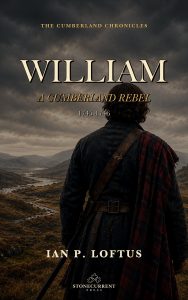
    The opening catalogue begins that process. Its first historical novel, William: A Cumberland Rebel, follows a young Cumbrian labourer drawn into the Jacobite rising of 1745. It is also the beginning of The Cumberland Chronicles, a sequence following generations of one family as national and international events intrude upon ordinary lives.

    Alongside it are books concerned with individual freedom, effective questioning and disciplined observation. Different subjects, but connected by an interest in ideas, history and the lives beneath larger events.

    Stonecurrent Press is at the beginning of its development. The catalogue is live, submissions are open, and there is much more still to build.

    Explore Stonecurrent Press:
    stonecurrentpress.co.uk

    Submission information:
    Stonecurrent Press submissions